Here is a unique experience that left a profound mark on me. While it may not be something I created, it holds a poetic essence that, I think, deserves to be shared. The main theme of the story is a video game called Outer Wilds. Now, you might question if a video game can truly belong in the world of art, and honestly, I largely agree with you. Yet, there are a few exceptional creations by talented individuals that are absolutely worth exploring, and I think this is one of them.
Outer Wilds is a journey into mystery and discovery. It has no enemies, no weapons, no dark overlords, no quests, no rankings, and no competition with other players. There is only you, the story, the world, and your memory. Set in an alternative universe, you embody a young creature who has just been appointed the new astronaut of the tribe. Armed with a rocket, your mission is to explore your solar system and uncover the remnants of a long-gone civilisation. Your primary weapon for this journey: a translator, which allows you to translate messages left behind by this ancient race. These messages, inscribed on walls, range from family discussions to grand scientific announcements.
One of the game’s core mechanics is that it resets every 22 minutes. After each cycle, nothing you have done is saved. Everything you have accomplished vanishes except your own memory as the player. This memory is what you will rely on while exploring the universe, seeking to unravel what happened, why time keeps restarting, and what you can do about it. I will not spoil the details because the less you know, the better your experience will be if you choose to play it. But I will say that the story touches on many profound themes: the importance of the journey, the fragility of life, the pursuit of knowledge, the passage of time, death, and the inevitable end of all things.
I hope I have sparked your interest in giving it a try because, as you can probably tell, I highly recommend this game. I could go on for hours about its exceptional level design, the physics, the beautiful soundtrack, and the intricate, mind-blowing story. But what I really want to highlight is why I believe this game is a masterpiece. As I mentioned, you spend the game investigating the remnants of a vanished civilisation through the messages they left behind. You never interact with an individual from this race—only find sketches on walls of how they looked like and, occasionally, their skeletons. Yet, as you progress, you learn more about them—who they were, what they were doing, and why they disappeared. You start to know their names, their habits, their personalities, and even little anecdotes about their lives. The more you play, the more you feel as though you know them, even though you have never seen one. And as you stumble upon their graves and the remains of their final moments, it hits hard. For me, the most powerful aspect of this game is its ability to make you feel deeply attached to beings that do not exist, all through the medium of text.
It may not be for everyone, but if you enjoy exploration, mystery, and puzzle-solving, I encourage you to give it a chance. You might just find a journey that resonates with you as profoundly as it did with me.
Outdoors in Göttingen, Germany, is absolutely beautiful, especially in spring. Whether you turn your head toward the forest patch in the south city, the Kiessee, or the Leine river, all of which lie near my latest flat share, the scenery is stunning. Almost two years in this city is too long not to have experienced its local activities. Luckily, last spring, I had the chance to witness one firsthand, courtesy of my three new flatmates who took me along on their annual wild garlic hunt.
Spring in Göttingen isn’t complete without the forest floors getting thickly carpeted with the Allium ursinum, otherwise known as ramsons, ramps, wild-garlic, or ‘Bärlauch’ (bear’s leek) in German, named aptly in commensurate with bears’ fondness for its bulbs and leaves, from what I read. The bear’s leek fascination, followed by the asparagus craze and berry season, is another item to be added to the list of German seasonal food manias I witnessed this year. This one occurs around March and April. The interest in wild garlic is not limited to just foraging in your local neighborhoods. In Germany and other parts of the world, people celebrate the wild garlic season with festivals and days dedicated to this interesting herb, the grandest of which occurs in the German town called Eberbach in Baden-Wurttemberg.
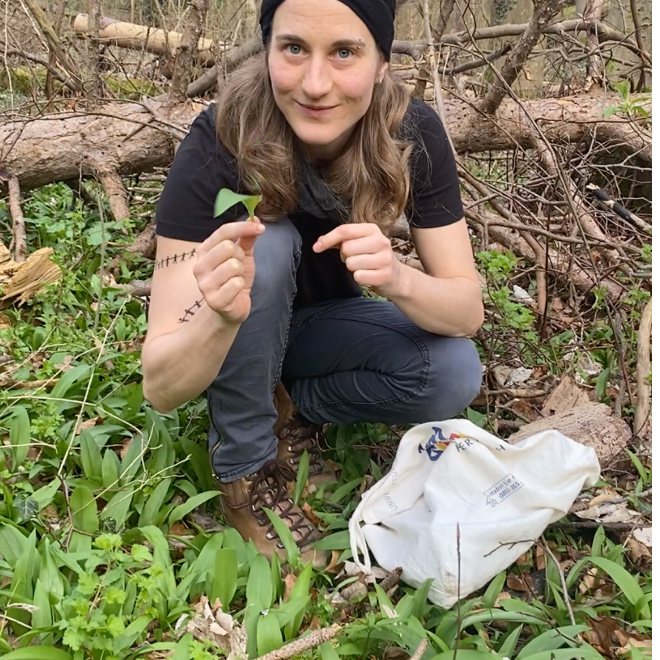
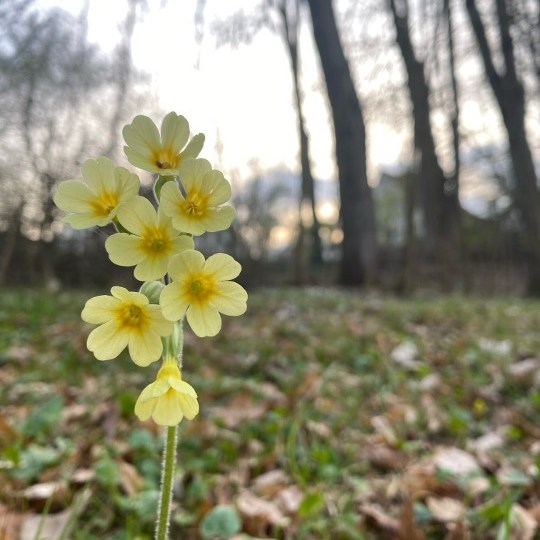
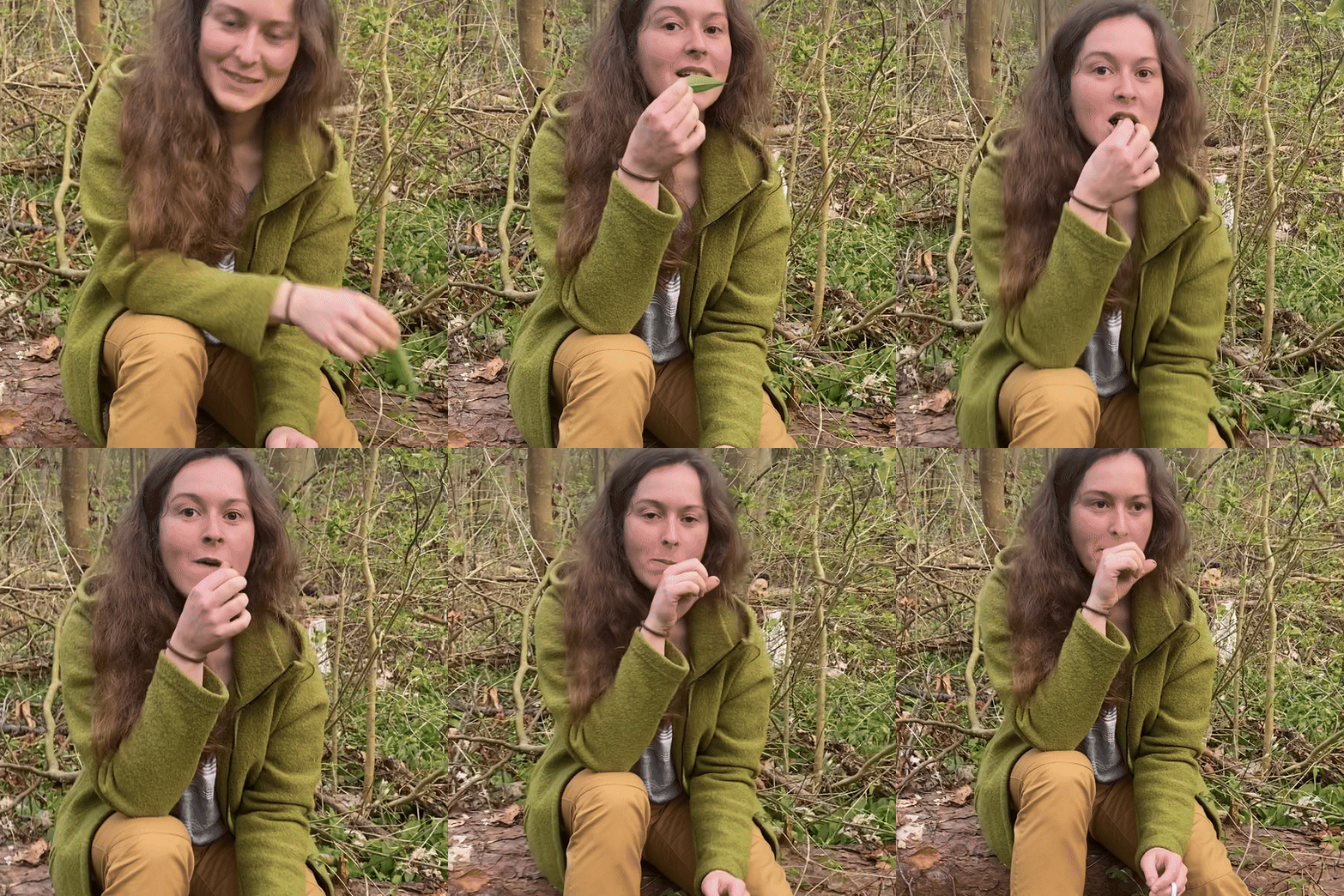
First photo: Silva is teaching me how to identify wild-garlic in the forest. Second photo: Totally unrelated flower I encountered on the journey: one of the two flowers in Göttingen forests (Primula veris) that Lea warned me not to pick because they are protected. Third photo: Alex is being practical with the edibility of the wild garlic
Placed in the botanical family of Amaryllidaceae, wild garlic is a spring herb that grows up to a height of about 50 cm. Aboveground, the plant develops 2-3 elliptic-lanceolate leaves, and the leaf bases are modified into bulbs (like onion), residing underneath the soil. Wild garlic prefers damp, nutritious, but well-drained soils in shaded localities. All the hype about this delicate forest dweller is accounted for its distinct garlic-like smell and taste. Its edibility makes this herb a favorite seasonal culinary choice in the European region, featured in gourmet recipes for garlic lovers. For example, the leaves can be used in salads, soups, and garlic-butter, and the bulbs can be used like garlic itself. The leaves are said to add flavor to some cheese varieties like ‘Cornish yarg’ cheese. Another interesting fact I stumbled upon is how garlic-flavored butter is made from the milk originating from the cows that were fed on wild garlic in 19th century Switzerland! However, my ultimate favorite option, that inspired me to write this account, is nothing but wild garlic PESTO!
Lea is explaining why wild garlic is so interesting
There’s a catch though. Wild garlic tend to be mixed up with another close relative of the herb, which happens to be toxic, thus inviting the wild garlic enthusiasts to be a bit conscious and wary with the picking. This toxic doppelganger, Lily of the Valley (Convallaria majalis), despite the bad reputation, is well known for its beautiful, fragrant, pendant, bell-shaped, white flowers, which aren’t that useful with the distinction so early in the spring when they aren’t yet in bloom. Therefore, a few additional features of the two herbs can aid you in picking the correct one and staying alive! Luckily, as biodiversity students, a massive collective knowledge of local plant biodiversity is shared among the three of my flat mates, and their enthusiasm for its practical application meant I had nothing to worry about.
As they pointed out, the strong garlic smell when the leaves are crushed between your fingers is the most obvious giveaway apart from the other foliar differences. The wild garlic leaves that are petiolate, always exist singly on their stems while the sessile leaves of lily of the valley always appear in twos. Surely, it’s easier to distinguish the two later in the season, toward May and June, when the flower stems emerge, with the wild garlic bearing a spherical head of white, star-shaped flowers. But, to use it in your dishes, the picking needs to be carried out early in the season when it’s rich in flavour before they flower. Because once they are in bloom, they wouldn’t taste as strong and would tend to be fibrous and bitter. Care should be taken to not dig out the bulbs from the ground, as the bulbs should ideally remain in the forest floor to produce leaves in the next season.
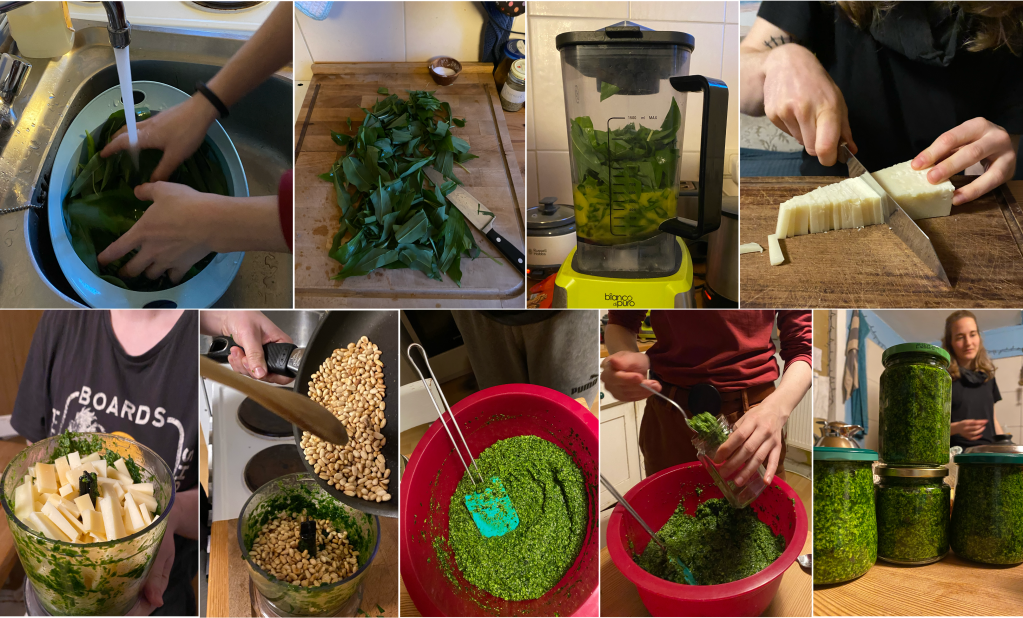
The process in the kitchen that led to the ultimate delicious jars of wild-garlic pesto
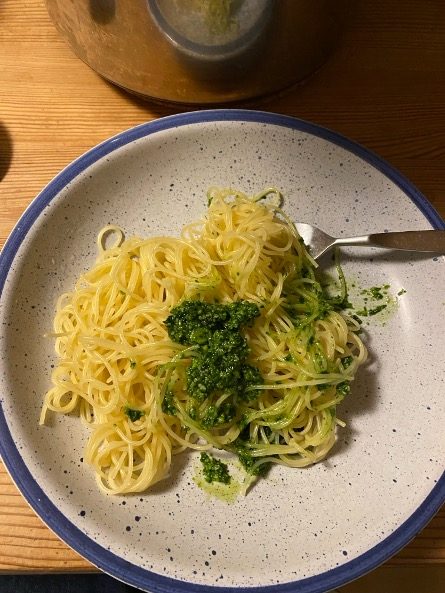
Pasta and Pesto!!!
After picking a few bags full of leaves and a lovely walk back to the apartment at sunset, it was finally time to make the wild-garlic pesto!! After washing and drying the leaves, we blended it all with loads of olive oil, cheese, and roasted pine nuts to make the pesto. Then it was ready to be stored away in jars to be used in the months to come. Of course, we didn’t forget to top off the day with a lovely, well-earned dinner of spaghetti with homemade fresh wild-garlic pesto, made with the leaves collected from our very own neighbourhood.
Needless to say, it tasted awesome, and our wild-garlic pesto batch lasted for about two months. Fun and insightful flat share activities with strong ties to nature, experienced with people who are purely passionate about what they learn are totally MyCuppaTea!!
This is the second song review that I will be undertaking which will again be another Coldplay song. I can’t stress this enough, but I have come across no other lyrical master than Chris Martin himself who intersperses subtle surprises in between his lyrics that I enjoy so much deciphering. Why Èkó? Not so obvious. Well, I could have chosen some mega Coldplay hit to write about, but no, I stick with Èkó for good reason. Èkó used to be a song that I would usually skip in my Coldplay playlist, as initially, it failed to stand out for any reason. But recently, just one single word in this song stood out for me randomly, which got me into diving a bit deeper into its lyrics. The word is “Lagos”. Lagos is a very lively Nigerian city, and I wouldn’t have paid much attention to this if not for the new international companions that I’ve gathered recently from my time in Europe. My Nigerian colleague had passingly mentioned Lagos a few times which caused me to recognise that it’s this city Chris Martin is singing about, and I wanted to dig a little deeper into its lyrics. My colleague’s dissection of it went more perfectly than expected, as he, who comes from Benin (a region just next to Lagos), was a perfect source of information providing a stellar interpretation of the lyrics from his own local point of view, that I would never have been able to come up with.
Èkó is the third track of Coldplay’s eighth album “Everyday Life” (sunset side), featuring backing vocals from the Nigerian singer Tiwa Savage. The song’s title “Èkó”, I learned, is a native name for the city Lagos, coined by its first King (Oba), Oba Ado. After trying out several angles, my colleague somehow concluded that the song seems like a narrative of a Nigerian expatriate who is visiting his motherland. So, Joseph, our protagonist, is coming back to Lagos, presumably his hometown, riding in on a “beam of light”, which according to my colleague, indicates a luxurious life that Joseph had had the opportunity to enjoy elsewhere in the world. Africans, seeking greener pastures is not unheard of, especially considering the numbers by which you find Africans in Europe, the USA, Canada, UK, and the boom of university enrolments of African students in these countries. Their determination to go seek better lives is unfortunately driven mostly by the current less-than-ideal economic and political situations that prevail, which is true for most nations nowadays, including mine. One other interesting thing that I learned here is the biblical story of Joseph the dream interpreter, one of the twelve sons of Jacob, who was betrayed by his brothers and sold into slavery in Egypt, where he achieves success in terms of status and wealth, eventually becoming the governor of Egypt. Later, Joseph, a paragon of forgiveness, wisely and nobly sustains the whole country and his brothers during a famine through his good fortune. I couldn’t help but draw parallels between this biblical Joseph and our Joseph from Èkó, who, in a way, seem to be following the same road (If you like, you can check out the animation “Joseph: King of Dreams (2000) by DreamWorks Animation to learn more about biblical Joseph, which I enjoyed watching).
Our Joseph comes back home to the “stray dogs and fights” of Lagos, which, as my colleague points out, are common sights of typical Nigerian urban cities that cause to establish a general populous ethos in the country. And Lagos, specifically, is the most populous city in the country with an ever-increasing population of 15 million people. And, of course, outwardly, the mention of religious establishments (the corrugate cathedrals) in the lyrics comes as no surprise since the majority in Lagos are evangelist Christians and religion is obviously held in high esteem. But why the use of the word “corrugate”? Could it be referring to the actual architecture of these religious establishments, or on a serious note, to the more commonplace, ordinary houses of the common man, supposedly with corrugated roofs which probably are respectable cathedrals to their inhabitants? I personally like to believe this second notion.
And then, the mention of the word “pilgrims” in the song is fascinating to me. Because what I’ve freshly learned was that “foreigners” or rather the alternative forms of people that are different from their own selves, are a factor for excitement and fascination for most Nigerians and are often referred to as “pilgrims”. But now, returning to his motherland, the roles might have been reversed and the rest of the countryfolk our Joseph meets, might come off as “pilgrims” or “foreigners” to him, due to the possible alienation he might have brought upon himself through his ex-pat status. So, instead of his brothers and sisters, “the sight of the pilgrims going nowhere in millions of cars” is what he gets to witness in his mind. They are “going nowhere”, because he might be under the impression that he himself is now going “somewhere”, owing to the luxuries of education or profession, or status that he might have achieved. And “millions of cars” is, well, simply and literally “millions of cars” because this is Lagos! Now, Lagos is only just a “dream”, an unattainable entity, that he probably once had, a dream to see it prosper, grow, and develop. The expectations he had for his country, in terms of the promises he made to himself, to help it grow someday and push it to a better state, have now evidently dissolved into a distant dream. Coming back, he probably realizes now that all his determination might be in vain, for there will be “no harvest”, despite any actions for betterment. Despite the unfortunate state of his motherland, he, a denizen of a continent plump with natural aesthetic beauty, is nevertheless deemed to miss its soul, its magic during his time away, which is portrayed here in the lyrics by the “sky and its circus and the millions of stars”. The sky and the stars could signify the elevation, the glory, and the majesty while the “circus” of colours in the sky reflected in the ever-pervasive entertainment characteristic of the African cultures.
Then comes the chorus of the song, a beautiful conglomeration of words that effectively captures the unique essence of the whole continent and its beauty that screams “Africa”. Personally, to me, the “African-ness” had always been what I felt when I was watching Lion King in my early years as I was growing alongside the magical animation. When the lyrics go “In Africa, the rivers are perfectly deep and beautifully wide”, I can think of nothing else but the opening to the movie and the way how the sun rises over the savannah, and over the glistening rivers with “Nants ingonyama bagithi baba” in the background.
Here’s a bit of the opening clip from Lion King, my favourite animation movie and how I first got introduced to Africa.
However, it’s not just that the waters and rivers, as a natural phenomenon, are always associated with the playfulness, unity, and harmony among the civilizations that benefitted from them, but also, another brilliant interpretation of my colleague states how the waters of Africa can connect both black and white nations in this diverse land mass of Africa, as the rivers meander along merging and dissolving a continent of multiple hues into one single entity. This connection with the waters and rivers is again emphasised later in the song with the line, “We dance in the water and hold each other so tight”. Again, stressing on the unity, harmony, and connection of a connected nation through and through, which Joseph had probably missed. The kind of emotional comfort and homeliness that you experience in your own country or home, which you are generally deprived of once you move away, is brilliantly highlighted in the part, “The mothers will sing you to sleep and say, “It’s alright, child It’s alright””. Who else can make you feel at home than your own mothers, these strangely designed group of people, the fountains of unconditional love, who would reassure you and say that everything is alright, even when nothing is, sometimes, which is something unfortunate and universal to most of the poor nations in the world.
So, Chris Martin sings about Lagos and Africa alternately in the verses and the chorus, which made my colleague suggest the idea that he might probably be using Nigeria and Lagos as a reference point to talk about Africa in general. Finally, toward the song’s end, we see that Joseph “dreams of his queen by his side”. Could this “queen” be his actual wife, whom he wishes to spend the beautiful “sunset” of his life with, or, as my colleague sees, his country could be as important to him as a “queen” for whom he wishes the best possible fate, that is to witness her as a bride, beautiful and adorned, indicating the never-dying love and hope our ex-pat still carries in his heart for his dear motherland.
Furthermore, we should definitely consider Chris Martin’s own original definition of the song which goes like this:
Here is the song called Èkó, which some of you may know as, the sort of local word for Lagos, one of the big cities in Nigeria, it’s also known as Èkó. And this song is about a guy called Joseph who is just a made-up character but, could be me or and also could be someone who leaves the countryside to try and make it in the city. It’s actually what I did and what we all did in the band and cities are tough, and lonely, and amazing, and uplifting, and all sort of things rolled into one. And this is the song “Èkó
Our take on the song might be a bit straying off from what Chris Martin originally had in mind, but as Chris himself says in his interview, “Chris Martin on Uninterrupted Disruption – Everyday Life Track by Track”, he doesn’t really like to explain the songs, as he doesn’t seem to understand them himself (so humble). So, let’s all assume that it’s alright to come up with our own interpretation for it as well, which also seems fitting and plausible in our eyes. Furthermore, I highly recommend you check out this interview, where he walks you through all the songs of the album “Everyday Life” (Please check out this great interview from the link below). This album has got to be one of my favourite Coldplay albums where the overall theme takes a turn from more general notions like love, to discussing more practical societal challenges currently faced by human beings, thereby diverting our awareness to where it’s actually required. Èkó, as a part of this great album that exudes the “humanness” of everyday life, is now a gem that I have recently unearthed and is therefore totally MyCuppaTea.
Check out the lyrics to the song :
Joseph rode in on a beam of light Stray dogs to welcome him, fights, corrugate cathedrals The sight of the pilgrims going nowhere in millions of cars
Lagos a dream in the distance From promises he’d made behind Where there was no harvest But he missed the sky and its circus And countless, the stars
In Africa The rivers are perfectly deep And beautifully wide In Africa The mothers will sing you to sleep And say, “It’s alright, child It’s alright”
In Africa We dance in the water and hold Each other so tight In Africa The mothers will sing you to sleep And say, “It’s alright, child It’s alright”
Joseph rode in on a beam of light And dreamed of his queen by his side There’ll be a beautiful sunset And you’ll be a beautiful bride
An exciting glance at the origin story of my brother’s infection with the travel bug. Read below to see how his life got integrated with the “Land of smiles” .
Ever since my first trip to Thailand in 2016, I have seized every opportunity to return. People often ask me why I keep traveling to Thailand instead of exploring new destinations. However, Thailand holds a special place in my heart, thanks to the amazing experiences and people I have met there. Allow me to elaborate […]
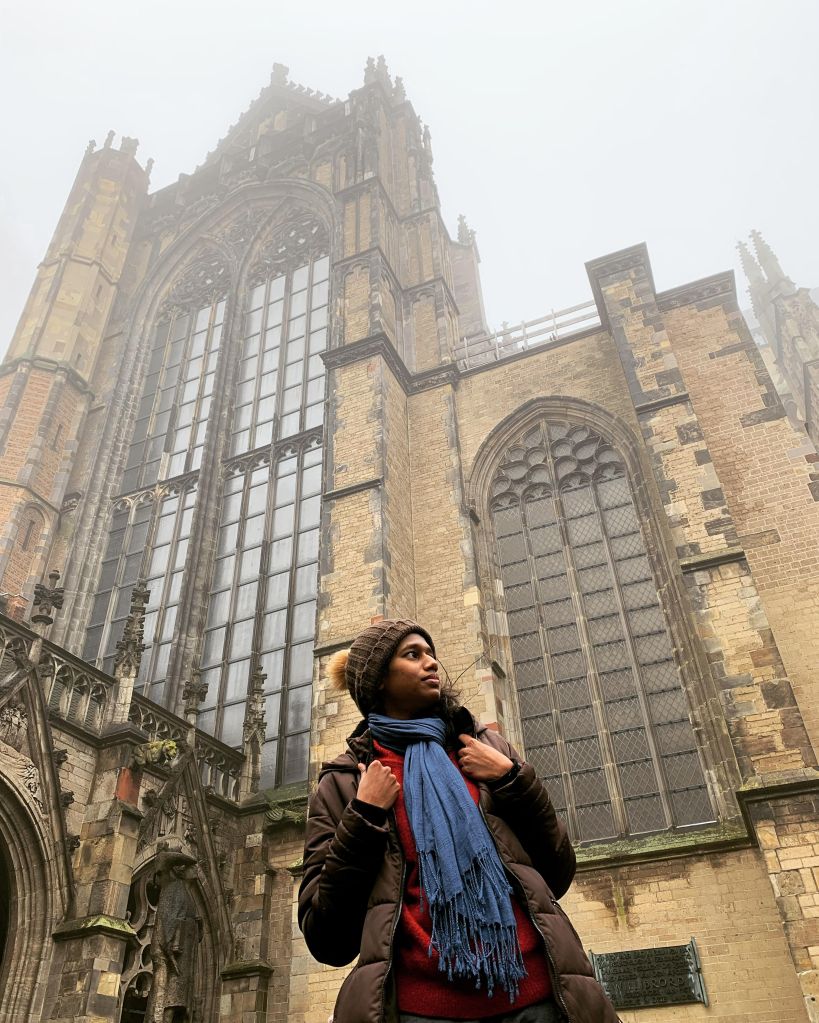
Me, looking around with the St.Martin’s Cathedral (Netherlands) towering behind me. Beautifully captured by Eki.
I am a shy person. No, I should probably be honest with myself here. I am a person that is too afraid, by nature. What am I afraid of? People. Social situations. Interpersonal interactions. That is probably why you’re finding this out in writing as opposed to in a video blog. What caused these fears? I have one major guess. The FEAR of what others might think about what you do, how you behave, how you talk, what you think!! This also includes overly seeking validation from others for what you do. Is this particular mindset a valid excuse to develop a sociophobic situation? My answer: No. How do I know this? Because I decided to brave these exact fears head-on and it worked.
Traveling places alone, living on my own, going to public places for miscellaneous tasks, expressing yourself verbally, confidently, are usually some trivial day-to-day activities for most. But, in my case, it’s not. These are usually well-executed missions with meticulous schemes, planned out well ahead in time, after factoring in all of the possible scenarios so that there’s absolutely no room for any error or embarrassment. Why? Because for some reason, it’s not just about me. For some reason, I believed that the bystanders who witness my actions, or the people that are even remotely involved with what I do, really give a damn about me. The truth is, they don’t even care about you.
If you go a few thousand miles up into the sky and look down you’d see yourself as a mere tiny black dot, lost among seven billion other buzzing black dots. Seven billion other black dots with seven zillion other worries packed inside each of these black dots, that they don’t probably have enough headspace or time to be critical about what you wore on this particular day at this particular time, or what you decided to do with your life two years ago. The other seven billion worry-filled black dots wouldn’t give a shit about the way you looked or what you did in a mere passing second in a timeless cosmos. Then, if you go even beyond, move past all the atmospheric layers, and look down through the clouds, oh oh what do you see? You are simply nothing, some invisible speck of dust. So, why worry really? Truly, there’s no need to fear ANYTHING in life. You simply have to do what you do, go places, meet people, talk to people, buy groceries and simply just live your life however the hell you want. Because, temporally and spatially, we are simply nothing compared with the ever entangled vastness around us. Once you gain this perspective and realise this simple truth, you’re fine and you don’t have to fear anything, like ever.
Some excellent advice from Queen Iduna to baby Elsa and baby Anna!! (Frozen 2)
Once you realise this, what do you do? You put it into action. Do all the things that you have always feared to do. I had the perfect opportunity to do this recently when I boldly decided to move to Europe for my higher studies. A very wise decision, I would say, as currently, it is giving me numerous chances to do things, simple things that I would usually fear, that I never had the guts to do on my own. For example, taking a long flight all alone, being chatty and social (coz I’m an introvert who usually keeps to myself), trying to get the hang of living by yourself, trying to limit your dependency on others, which, ironically, requires lots of interactions with the external world. I think I have never been so satisfied with myself and my life as I am being at the moment. It is like unlocking some hidden levels or talents that I never previously knew existed. This massive freshness in your outlook of the world, is, to my belief, the reward you get for deciding to face your fears. No matter how daunting it feels initially, taking baby steps with utter determination is what matters.
So, I still don’t know how this journey would turn out to be. But I am hopeful that it would turn me into the best version of myself. So, if you are still having second thoughts about getting out there, please don’t. Just at least try for it, try to do something and the doors would open up for you. I haven’t figured everything out yet, but what I can say, for the moment, is that at least I am there, I am on my way. So, just go for it and MAKE A DECISION to brave what you fear the most, even if it is not your CuppaTea.
Life is good,
With a bend or two of hyphae,
The mycelial tangle that crisscrosses,
in who knows which way.
Birthing tessellations,
mycological micro-monuments,
garlands that decorate,
the fallen warriors of the forest,
who have heeded the nature's say.

-shane-
Here is another mushroom story! Interestingly enough, this one is about a rather peculiar kind of mushroom; the “Bird’s nest fungus”. I had already heard of this mushroom (or read about it somewhere) by the time I was learning different forms of mushrooms for my “Microbial Life” course practicals in the second year at university. It was really around that time that I developed a curiosity and amazement toward how diversely formed mushrooms are. I remember seeing charismatic earthstars, phallic stinkhorns, squishy jelly fungi, and weird puffballs during that lab class and thinking “ Whoah, how weird can a mushroom be”. After that lab, it became my habit to deliberately examine the diversity and individuality of each mushroom that I come across. It also became my habit to photograph the mushrooms that I find in my backyard, and also to go hunting for them whenever the climate is right (I am truly blessed to have had a comparatively large unmodified backyard at my house, still preserved in its natural ecological state, within the rapidly urbanizing village where I live).
Anyhow, one day, while I was mushroom hunting in my backyard, ever so randomly, I came across just a single bird’s nest mushroom, hidden in the leaf litter, lodged onto a tiny twig for its dear life. This find was surely serendipitous since it’s almost impossible to detect something that small, the way I did at that moment. It’s the first time that I’ve seen a bird’s nest fungus in the wild, and the truth be told, I wasn’t even aware at the time that this mushroom was in Sri Lanka. Those days, I was engaged in my undergraduate research, which involved culturing lots and lots of mushrooms. So I tried my best to make a culture of it but unfortunately, nothing grew on my culture plates!
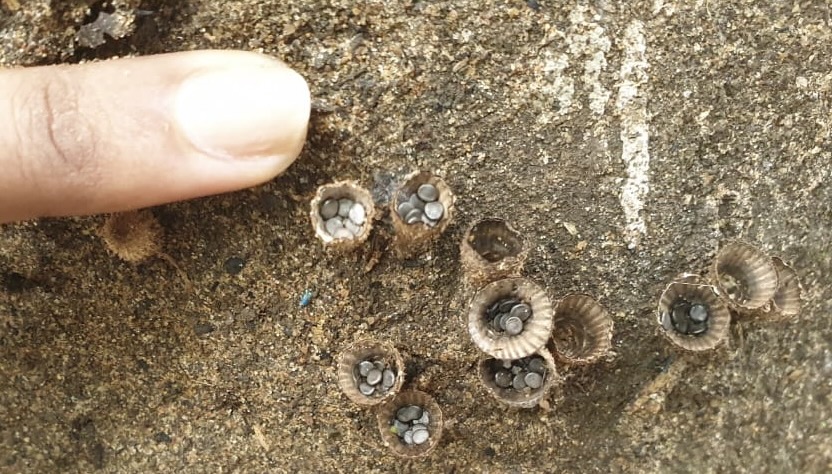
A lone survivor! The first bird’s nest that I encountered. Almost all of the peridioles are splashed out. There are some structures resembling disintegrated fruiting bodies around it. Unfortunately, I haven’t placed a reference object but the green stuff around it is Calymperes moss, so you can gauge the size roughly.
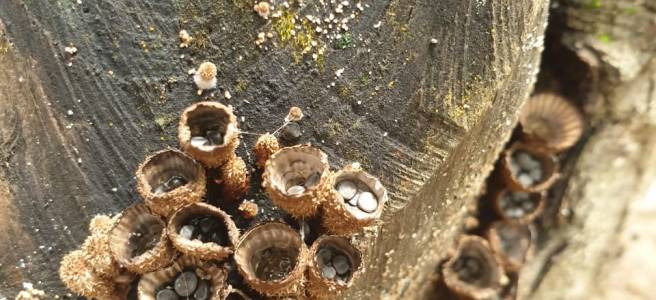
Eventually, the bird’s nest was forgotten since it wasn’t pertinent to the topic I was working on, which was edible mushrooms, and the bird’s nest mushroom is hardly edible. But later on, about a year later, this mushroom presented itself to me again, this time, in the garden of my university. And not just one nest, but a whole lot of fruiting bodies sitting on a cut-down tree stump! I was delighted. On this occasion, I did some research on the specific culturing techniques of it and managed to obtain a pure culture, finally!
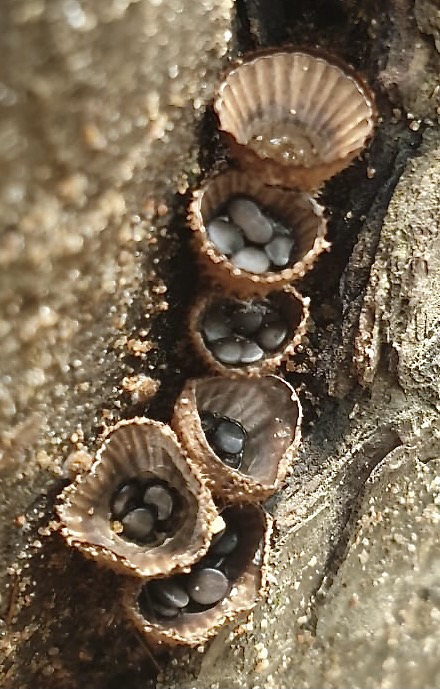
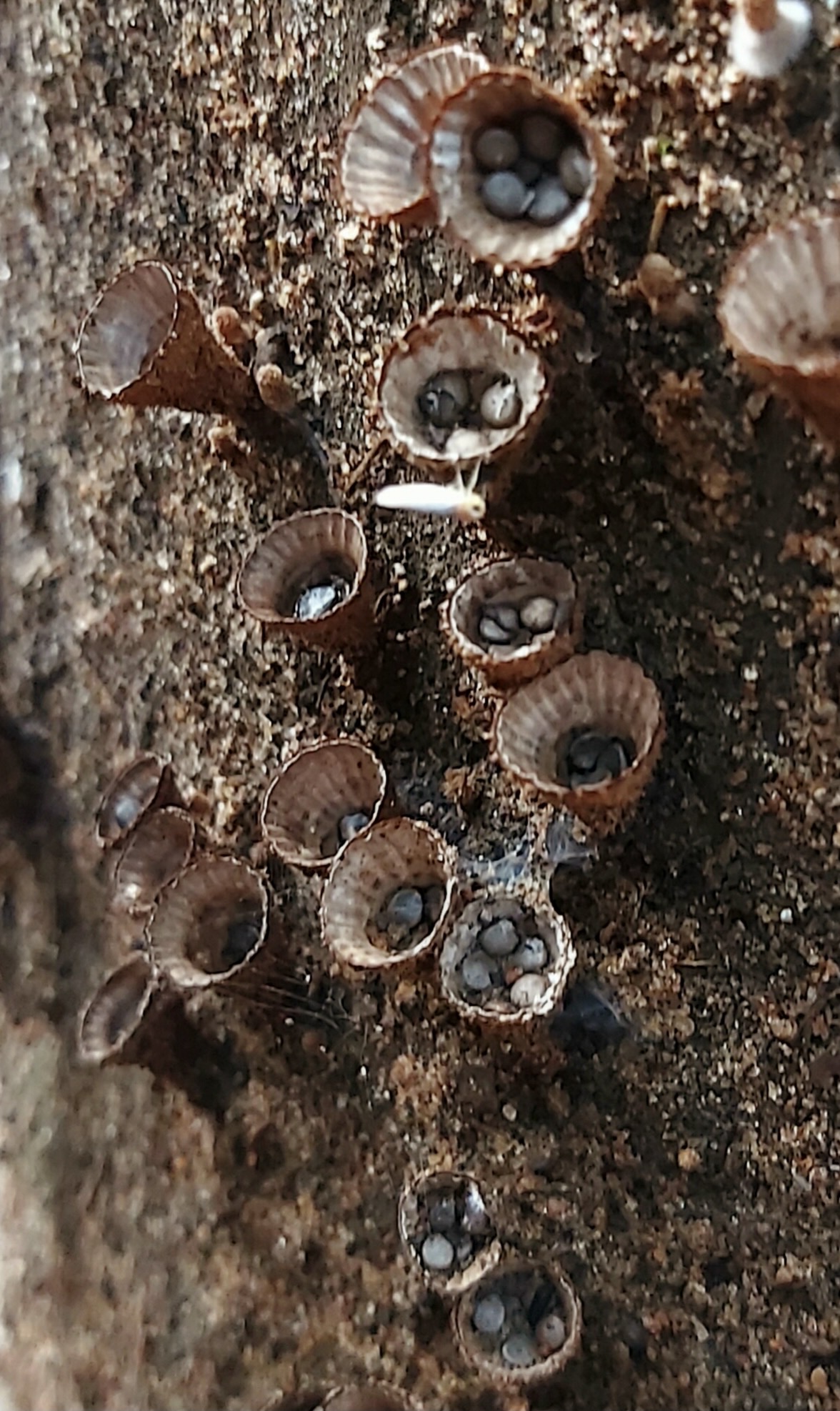
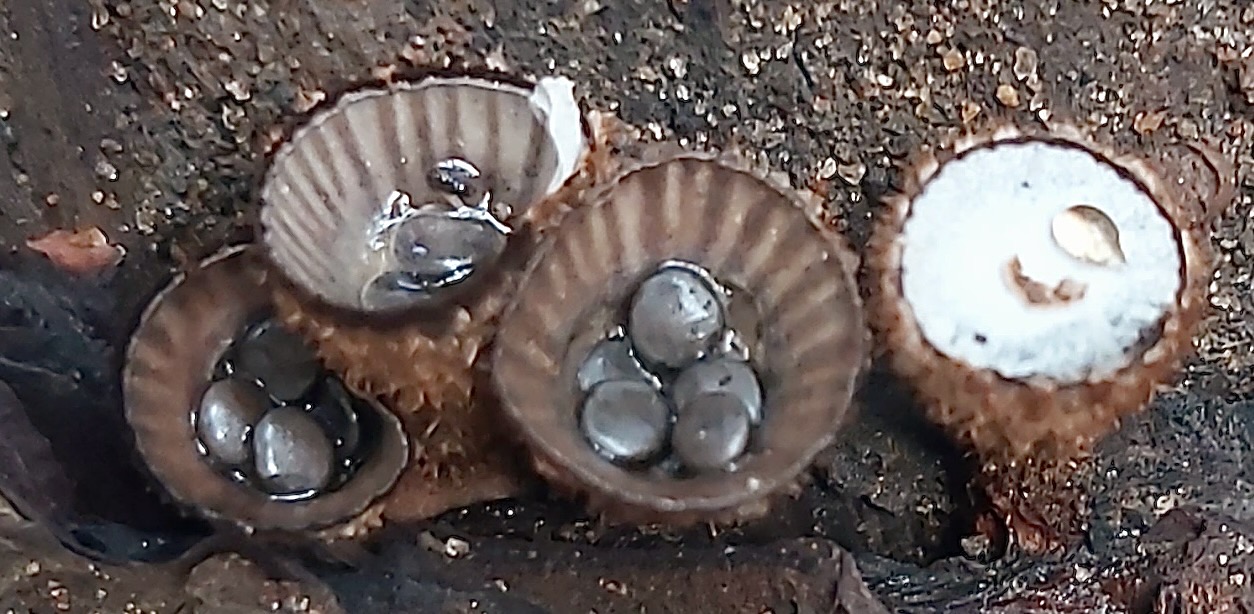
So apparently, to spot certain bird’s nests, treetops aren’t the best place to look for. Sometimes, in forest floors, on decaying wood or debris, inconspicuous mycological wonders lie utterly unnoticed. One such Basidiomycete group, which strays way off from the usual “cap and stipe” cliché of mushrooms, is the “Bird’s Nest Fungi”. “Bird’s nest fungi” is a catchall term for several species that are included within the family Nidulariaceae of the order Agaricales. The fruiting bodies of the genera Cyathus, Crucibulum, Mycocalia, Nidula and Nidularia are basically categorized under the bird’s nest fungi. Their curious and absurd form, which resembles tiny bird nests, makes them one of the most fascinating groups of fungi in nature.
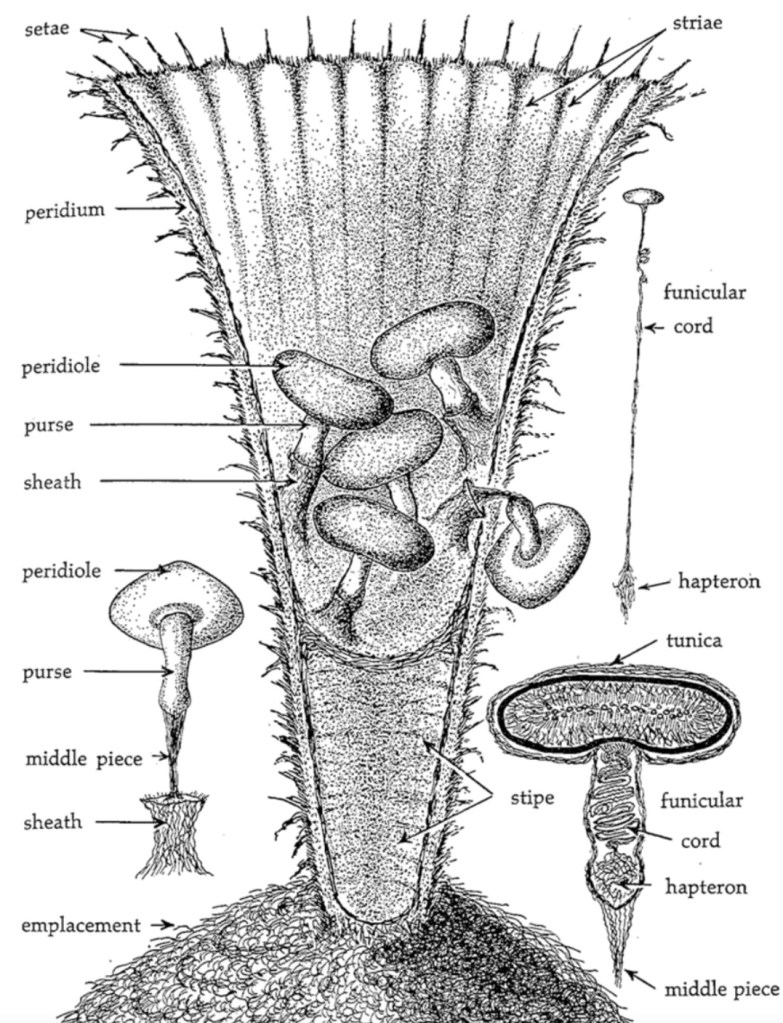
The cup/nest structure, termed as the ‘Peridium’, is usually around 1 cm tall and is sometimes shaggy outside (Eg: Cyathus, Nidula). A thin outer covering known as the ‘Epiphragm’ covers the peridium when young. These miniature versions of bird’s nests come with their own minute version of “eggs” referred to as ‘Peridioles’. These are the blackish-grey, egg/lentil-shaped structures that are stacked inside the nests. They carry basidiospores, the reproductive units of Basidiomycete fungi. Peridioles are connected to the peridium with the aid of a ‘Funicular cord’. This cord usually stays condensed within a ‘Purse’ located below each peridiole. The free end (the end that is not attached to the peridiole) of this cord forms an adhesive pad called the ‘Hapteron’ and joins with the inner peridium (please refer to the diagram to guide yourself through all these terms).
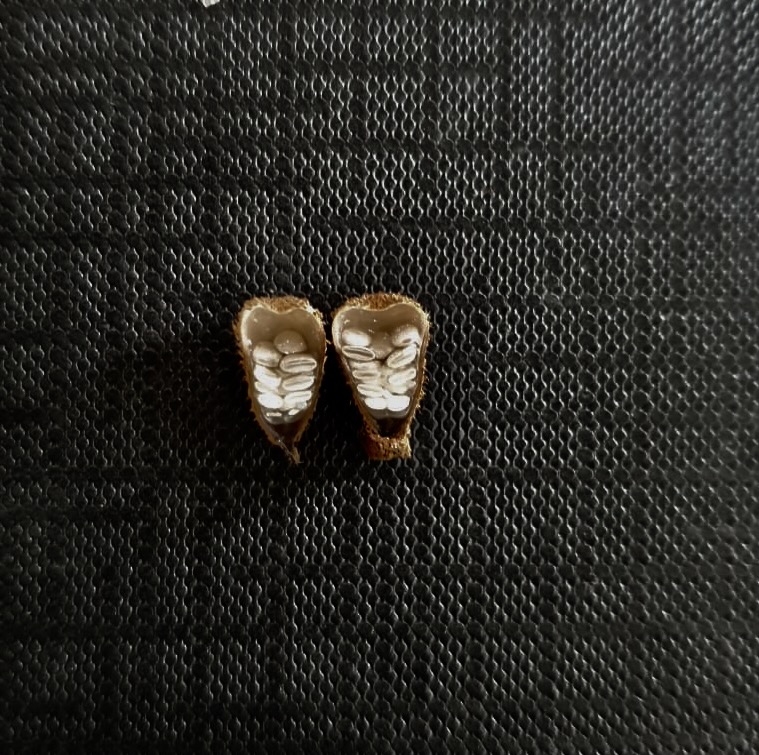
The illustration is from Brodie (1975) . Picture on the right: is how it looks like when you cut through an immature structure.
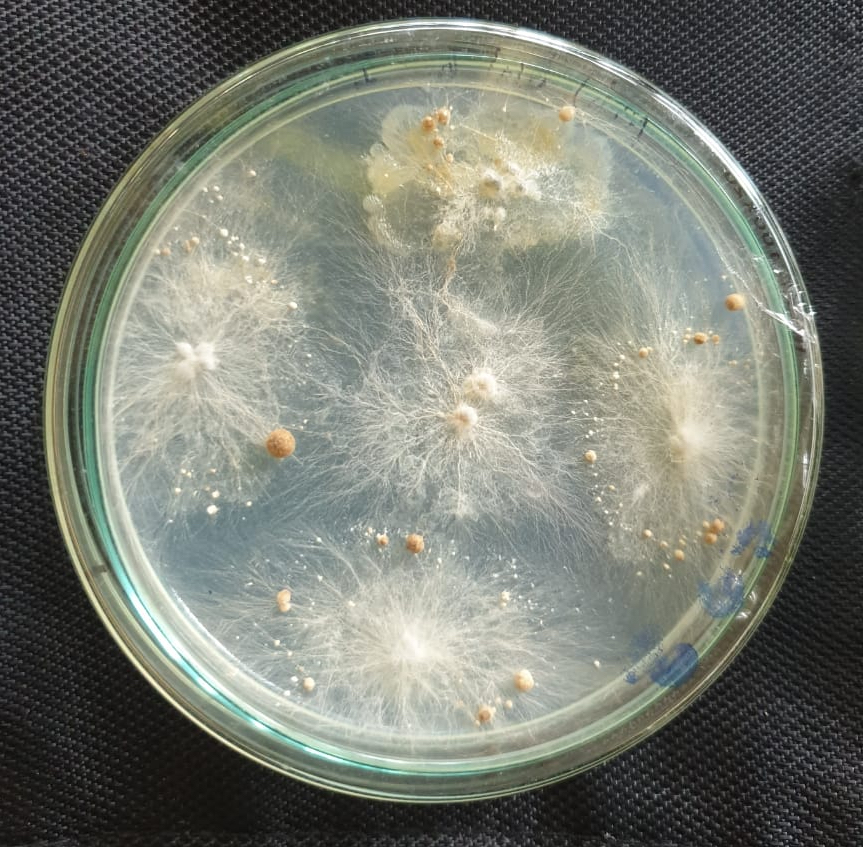
The bird's nest fungus, cultured on artificial media. The numerous speckles are the tiny fruiting bodies initiating from the culture. They did not develop into mature fruiting bodies and never opened (do excuse the notorious bacterial contamination encroaching into my fungal colonies)
These minuscule bird’s nests are not just about the looks but in fact, they serve a functional purpose. Martin (1927) discussed for the first time how the peridium functions as a splash cup to disperse the peridioles out of the nest. When raindrops splash on the cup, the hydraulic pressure causes the peridioles to be dislodged from the peridium and just like that, they finally leave the nest! They are splashed out, all the while untangling the condensed 10 cm long tail behind them. Upon contact with a substrate (usually foliage), the funicular cord entangles with it while adhering the peridioles to the substrate through the sticky hapteron, where the basidiospores germinate.
Apart from being saptrotrophic fungal decomposers of nature, and being visually ingenious, they don’t hold much importance. However, certain scientific studies were able to uncover some potential uses for these fascinating bird’s nests. Some were found to possess rather important bioactive compounds that have medicinal and biocontrol properties. Many studies have revealed the ability of Cyathus spp. in controlling several soil-borne plant pathogenic fungi including Fusarium spp. and Pythium aphanidermatum through antagonism (antagonism is when a fungus interferes/oppresses the growth and activity of another pathogenic fungus). Bird’s nest fungi were also reported to be particularly effective degraders of lignocellulosic material, proving to be potential candidates for industrial use in the bio pulping and the animal feed industries.
Coming to the end of this account, I cannot help but reminisce these words of Lady Galadriel from The Lord of the Rings, which goes as “Even the smallest person can change the course of the future.” Well, that clearly is the case for me, as these tiniest of the mushrooms definitely have changed my perspective of how I view the grandeur of mother nature. That is simply why these exquisite mycological wonders are totally MyCuppaTea.
Reference texts:
Martin, G. (1927). Basidia and Spores of the Nidulariaceae. Mycologia, 19(5), pp.239-247.
Sethuraman, A., Akin, D., Eisele, J. and Eriksson, K. (1998). Effect of aromatic compounds on growth and ligninolytic enzyme production of two white rot fungi & Ceriporiopsis subvermispora; and Cyathus stercoreus;. Canadian Journal of Microbiology, 44(9), pp.872-885.
Sutthisa, W. (2018). Biological Control Properties of Cyathus spp. to Control Plant Disease Pathogens. Journal of Pure and Applied Microbiology, 12(4), pp.1755-1760.
Brodie, H. J. 1975. The bird’s nest fungi. Univ. Toronto Press. Toronto, Toronto, Ont. 199 p.
One weekend, my brother so desperately needed a break from his work and we all ended up on our way to Nuwara Eliya, the most populous holiday destination among Sri Lankans, preferred for its cool climate, presenting a welcome and relaxing respite, especially for the ones like us who are constantly wearied from the heat of Colombo. With the time posing limitations on our itinerary (since this was a short excursion of just one and a half days), we chose “Moon Plains” as our main event for the weekend as it was an ideal, short, non-tiring jaunt suiting the occasion. Although there are several attraction sites to visit around Nuwara Eliya, we somehow always manage to end up visiting Horton Plains every time we go to the central highlands. Don’t get me wrong, I love Horton Plains. It is in fact one of my favourite places in the country. But this time around we decided on Moon Plains for a change and because it is relatively unheard of compared with the other, well-known travel destinations. My knowledge of Moon Plains, at the time, was only limited to what I have learned in my grade eleven Geography. I remember it being mentioned alongside Horton Plains as examples for Pathana grasslands.
Moon Plains (in Sinhalese called Sandathenna) is located in Nuwara Eliya District within the Central Province of Sri Lanka. It is located right next to Lake Gregory and is approximately 5 km from the Nuwara Eliya town. Located at a 1950 m elevation from sea level, Moon Plains lie within the upcountry wet zone and is categorised under the “Wet Pathana Grassland” vegetation type based on the plant communities that are present there. Another distinct feature about the Moon Plains area, in addition to the cool safari rides that it is now famous for, is the Moon Plains Sanitary Landfill that was installed in 2004, funded by Japan International Cooperation Agency (JICA). Until its installation, a section of the Moon Plains area had been utilised as an open garbage dumping site under the Municipal Council of Nuwara Eliya. Now, however, the area is renovated and redesigned and is attracting much attention as a tourists attraction spot, with a whole brigade of safari jeeps working in full throttle to keep up with the increasing numbers of both local and foreign tourists that visit the place ever since it was opened as an Agricultural and Environmental Tourism Zone in 2014.
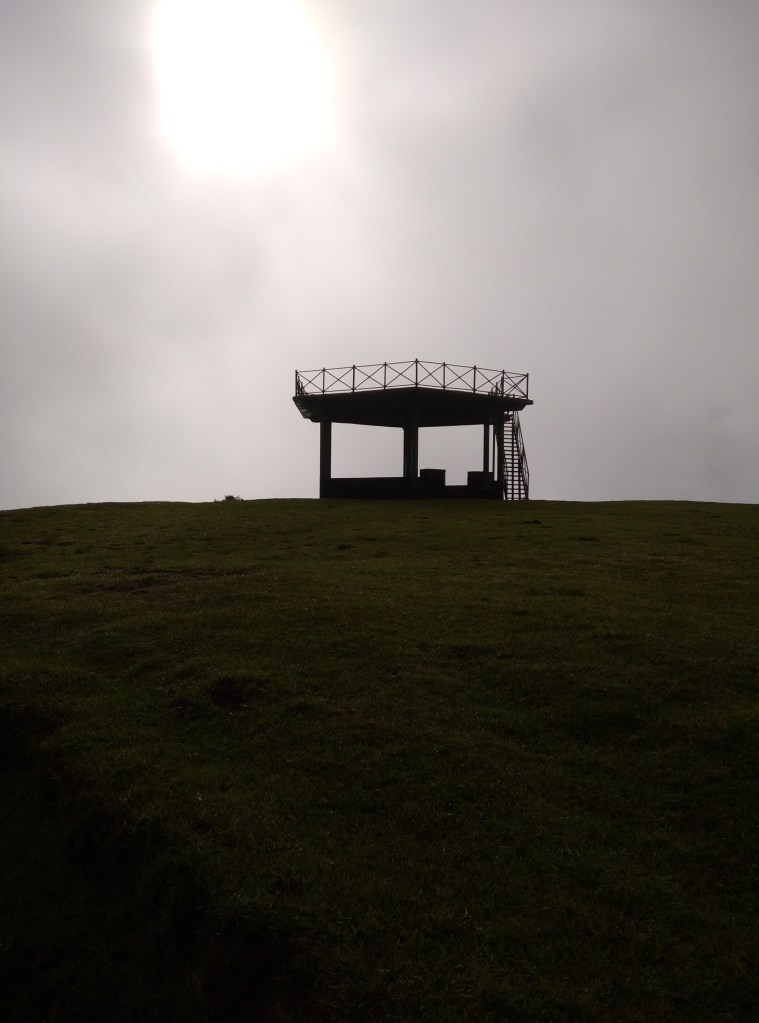
The hexagonal platform installed at the top of Moon Plains viewpoint
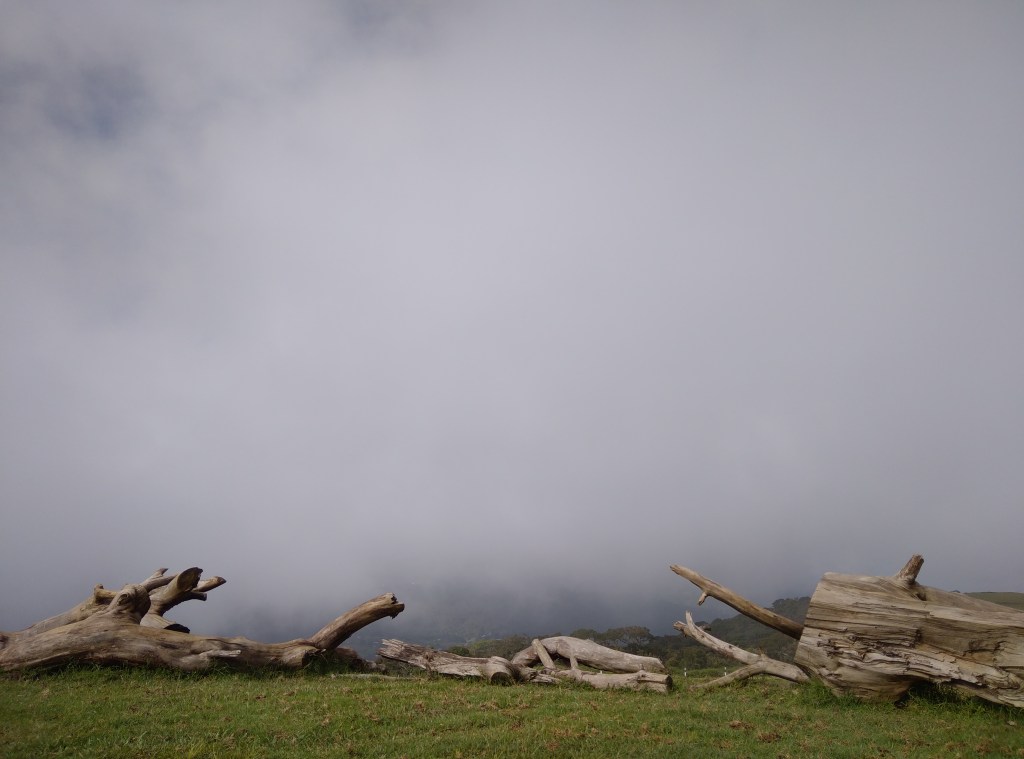
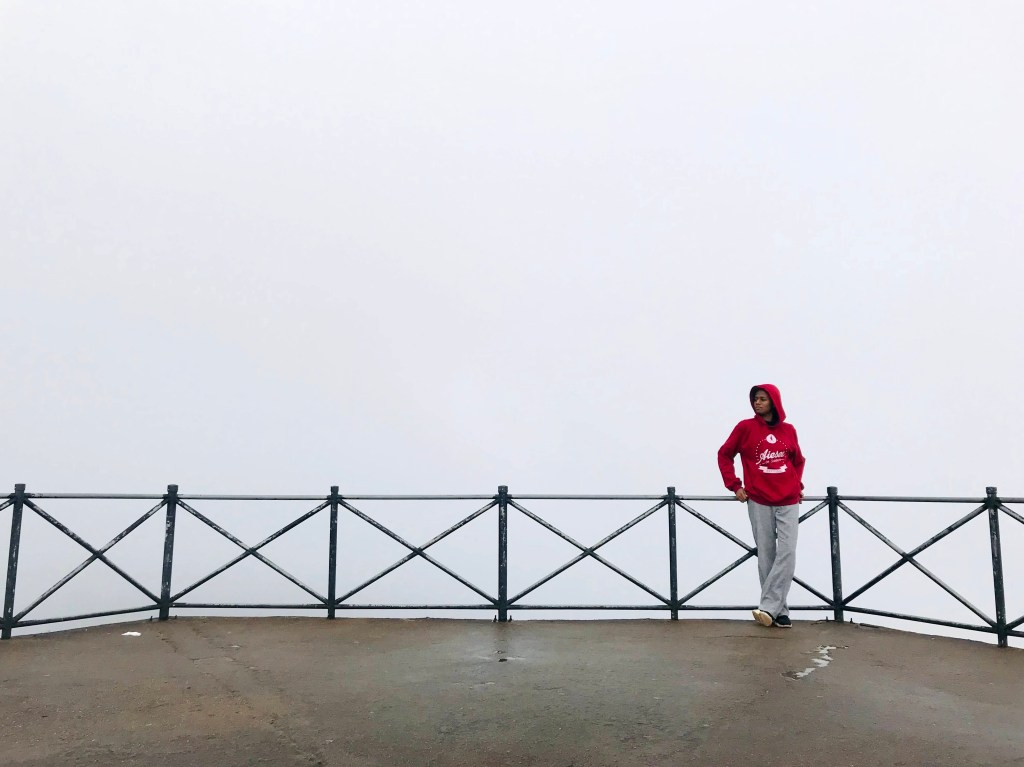
Unfortunately, a thick fog veils the beautiful scenery beyond.
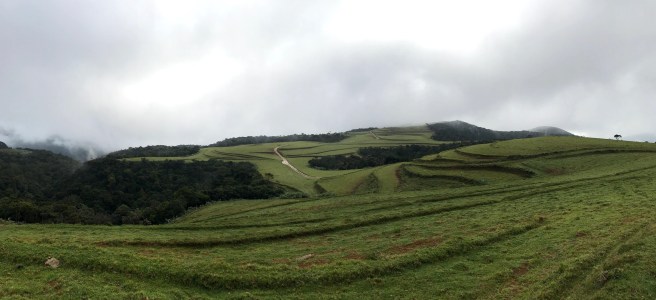
We arrived early in the morning at the location and bought our entry tickets that cost 50 rupees each. As the very first group for the day, we knew we had the advantage of enjoying the location by ourselves without the distraction of other visitors, which is always satisfying. At the entrance, before entering the plains, we had to switch to a safari jeep (which cost 2000 rupees) whose driver became the guide for our oncoming tour. The morning was extremely misty and chilly and we rolled along the bumpy roads that snaked through the plains toward the “Moon Plains Viewpoint”, which is supposed to be the highlight of the tour. At the onset of the ride, we first drove through the greenhouses and the premises of the “government potato seed farm” which comes under the Department of Agriculture, through which the entrance to the plain lies. After passing that area, what rolled on were the vast expanses of grass carpeted hilly undulations, bordered by the dark green patches of cloud forests of the surrounding Kandapola-Seetha Eliya forest reserve, and, of course, the beautiful silence (this reminded me a lot of the landscape of Horton Plains which has a similar vegetation pattern). To add to the excitement, we had sporadic sightings of birds (Moon Plains is said to be home to 105 bird species out of which 16 are endemic), a jungle fowl, a group of wild boars, buffaloes, and bear monkeys (purple-faced leaf monkey) that enlivened the landscape.
From our very amiable guide, we learned that certain parts of the plains are being used for seed potato cultivation with the practice of “crop rotation”. Here, a “ fallowing” type crop rotation is being practiced. This means, after completing one cycle of potato cultivation in one fraction of the field, that land is left fallow (without cultivating). Meanwhile, the remaining portion of land is cultivated. Likewise, seed potatoes are cultivated alternately in two fractions of the field. Through this practice, the soil texture and fertility could be maintained over a longer period by allowing the land to recover, rather than cultivating continuously on the same spot. So, on our journey through the Moon Plains, we were shown both these fallow lands and the ones that are under cultivation.
[Seed potato plants are cultivated to obtain tubers with the sole purpose of replanting, to obtain fresh potato plants for new cultivations. These seed potatoes, generated in these premises, are eventually distributed among the local farmers to initiate individual potato cultivations]
Just me, waiting for the mist to clear out (It is not a white wall behind me)
Eventually, we arrived at the viewpoint which is generally referred to as the “ Second World’s End” (the first is in the Horton Plains). There is a small platform that is perched at the very top of the viewpoint from where you can capture a panoramic view of the surrounding hill country. Unfortunately, a very persistent veil of fog that descended while we were at the viewpoint robbed us off of this beautiful scenery. Our guide explained that the view covers two provinces, Uva and Central, and nine mountain peaks, Pidurutalaga, Single Tree Mountain, Kikiliyamana Mountain, Great Western Mountain, Konical Hill Mountain, Kirigalpoththa Mountain, Thotupola Mountain, Hakgala Mountain and Namunukula Mountain, some of which he was able to show us vaguely through the misty veil.
However, we couldn’t stay for long at the viewpoint until the mist cleared out (although we so desperately wanted to) as the jeep ride only permits just one hour for the round trip, per group. Sadly, we departed and made our way back to the entrance and at the very end of our ride, we saw several other groups just starting theirs. If the mist had lifted, they would have probably been able to capture the magnificent scenery that we couldn’t. Anyhow, what is not to like in a relaxing ride through hilly terrain in cold weather in the central highlands of Sri Lanka? Therefore, this Moon Plains excursion is so totally MyCuppaTea.












 MyCuppaTea