
Outdoors in Göttingen, Germany, is absolutely beautiful, especially in spring. Whether you turn your head toward the forest patch in the south city, the Kiessee, or the Leine river, all of which lie near my latest flat share, the scenery is stunning. Almost two years in this city is too long not to have experienced its local activities. Luckily, last spring, I had the chance to witness one firsthand, courtesy of my three new flatmates who took me along on their annual wild garlic hunt.
Spring in Göttingen isn’t complete without the forest floors getting thickly carpeted with the Allium ursinum, otherwise known as ramsons, ramps, wild-garlic, or ‘Bärlauch’ (bear’s leek) in German, named aptly in commensurate with bears’ fondness for its bulbs and leaves, from what I read. The bear’s leek fascination, followed by the asparagus craze and berry season, is another item to be added to the list of German seasonal food manias I witnessed this year. This one occurs around March and April. The interest in wild garlic is not limited to just foraging in your local neighborhoods. In Germany and other parts of the world, people celebrate the wild garlic season with festivals and days dedicated to this interesting herb, the grandest of which occurs in the German town called Eberbach in Baden-Wurttemberg.
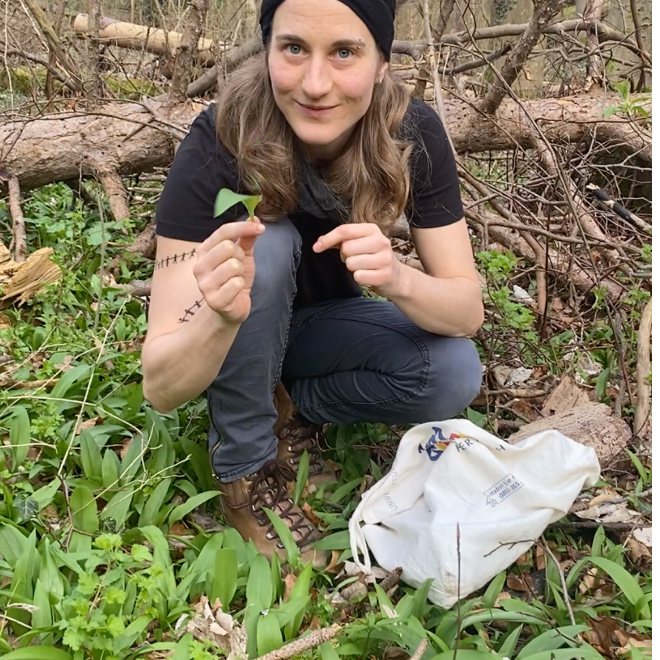
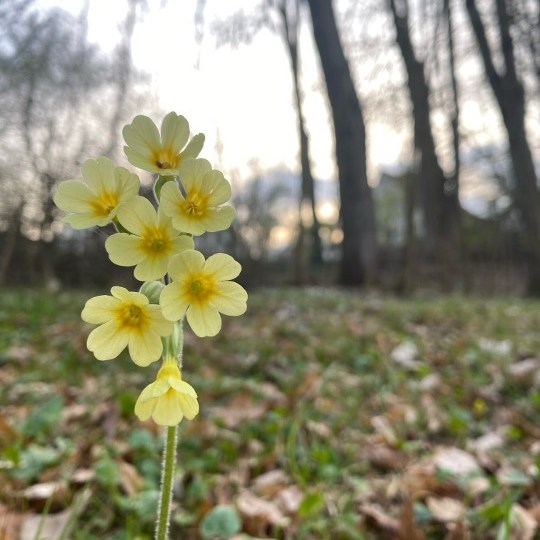
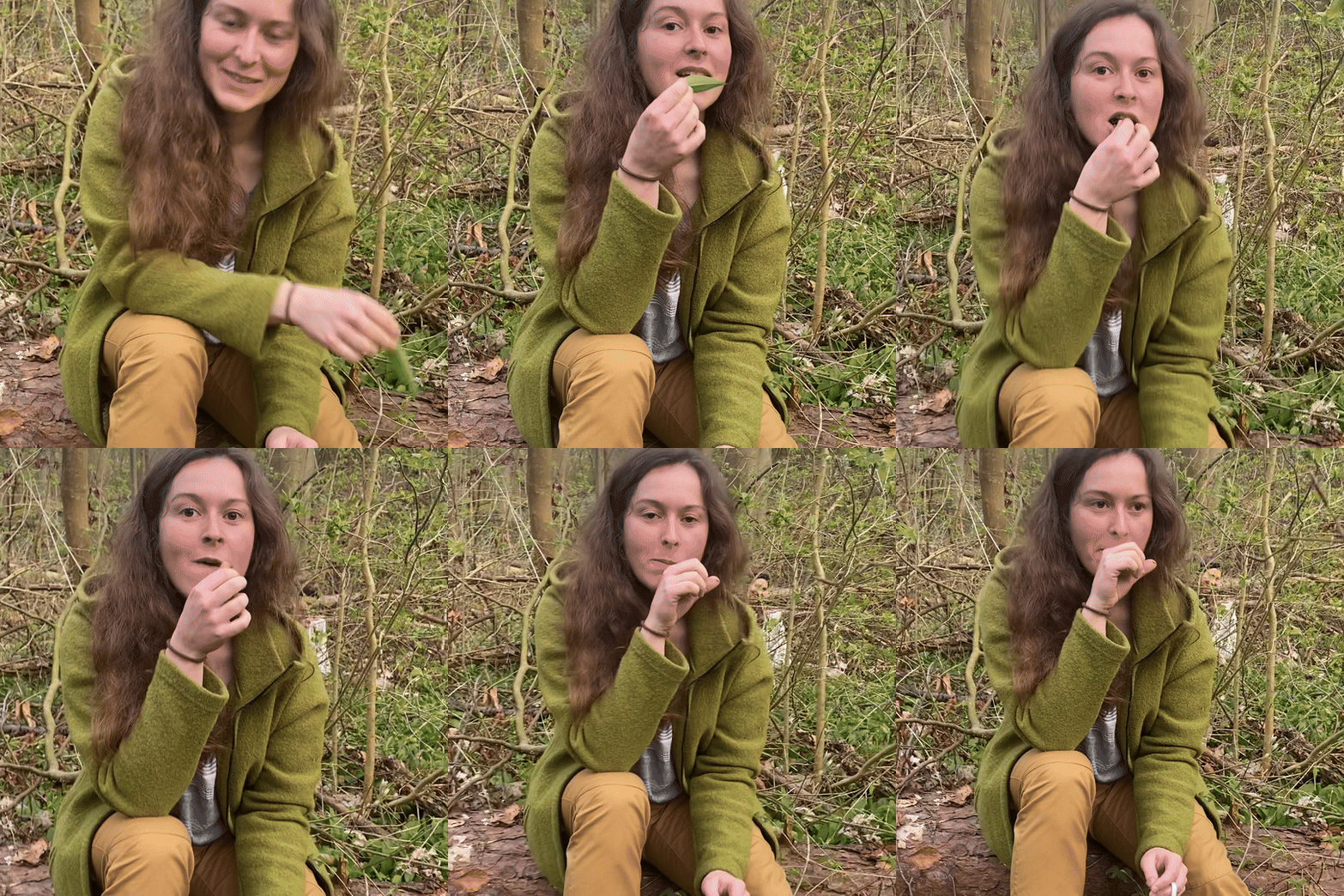
First photo: Silva is teaching me how to identify wild-garlic in the forest. Second photo: Totally unrelated flower I encountered on the journey: one of the two flowers in Göttingen forests (Primula veris) that Lea warned me not to pick because they are protected. Third photo: Alex is being practical with the edibility of the wild garlic
Placed in the botanical family of Amaryllidaceae, wild garlic is a spring herb that grows up to a height of about 50 cm. Aboveground, the plant develops 2-3 elliptic-lanceolate leaves, and the leaf bases are modified into bulbs (like onion), residing underneath the soil. Wild garlic prefers damp, nutritious, but well-drained soils in shaded localities. All the hype about this delicate forest dweller is accounted for its distinct garlic-like smell and taste. Its edibility makes this herb a favorite seasonal culinary choice in the European region, featured in gourmet recipes for garlic lovers. For example, the leaves can be used in salads, soups, and garlic-butter, and the bulbs can be used like garlic itself. The leaves are said to add flavor to some cheese varieties like ‘Cornish yarg’ cheese. Another interesting fact I stumbled upon is how garlic-flavored butter is made from the milk originating from the cows that were fed on wild garlic in 19th century Switzerland! However, my ultimate favorite option, that inspired me to write this account, is nothing but wild garlic PESTO!

Lea is explaining why wild garlic is so interesting
There’s a catch though. Wild garlic tend to be mixed up with another close relative of the herb, which happens to be toxic, thus inviting the wild garlic enthusiasts to be a bit conscious and wary with the picking. This toxic doppelganger, Lily of the Valley (Convallaria majalis), despite the bad reputation, is well known for its beautiful, fragrant, pendant, bell-shaped, white flowers, which aren’t that useful with the distinction so early in the spring when they aren’t yet in bloom. Therefore, a few additional features of the two herbs can aid you in picking the correct one and staying alive! Luckily, as biodiversity students, a massive collective knowledge of local plant biodiversity is shared among the three of my flat mates, and their enthusiasm for its practical application meant I had nothing to worry about.
As they pointed out, the strong garlic smell when the leaves are crushed between your fingers is the most obvious giveaway apart from the other foliar differences. The wild garlic leaves that are petiolate, always exist singly on their stems while the sessile leaves of lily of the valley always appear in twos. Surely, it’s easier to distinguish the two later in the season, toward May and June, when the flower stems emerge, with the wild garlic bearing a spherical head of white, star-shaped flowers. But, to use it in your dishes, the picking needs to be carried out early in the season when it’s rich in flavour before they flower. Because once they are in bloom, they wouldn’t taste as strong and would tend to be fibrous and bitter. Care should be taken to not dig out the bulbs from the ground, as the bulbs should ideally remain in the forest floor to produce leaves in the next season.
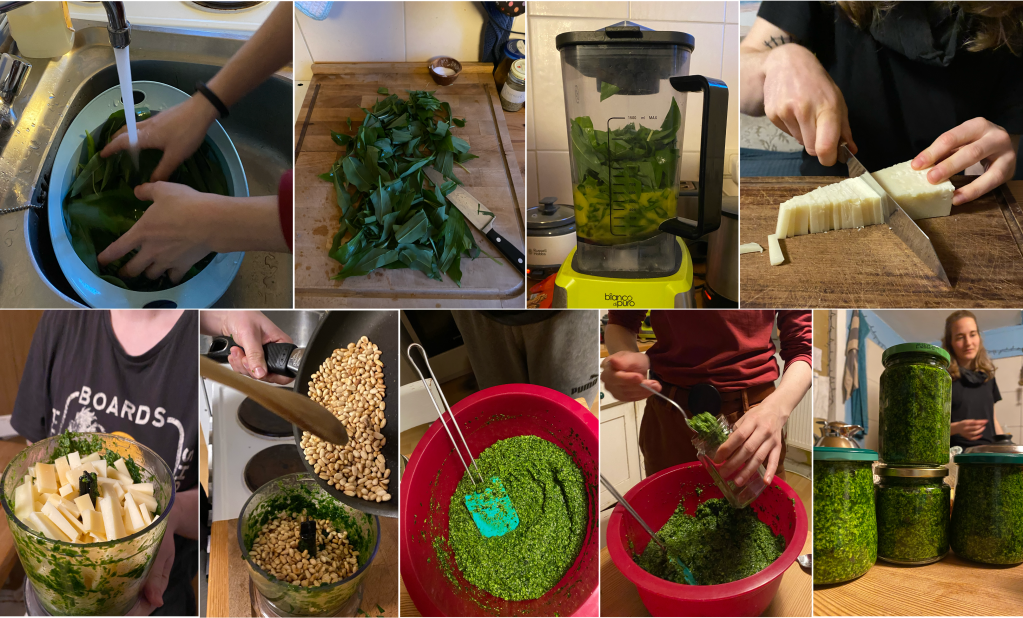
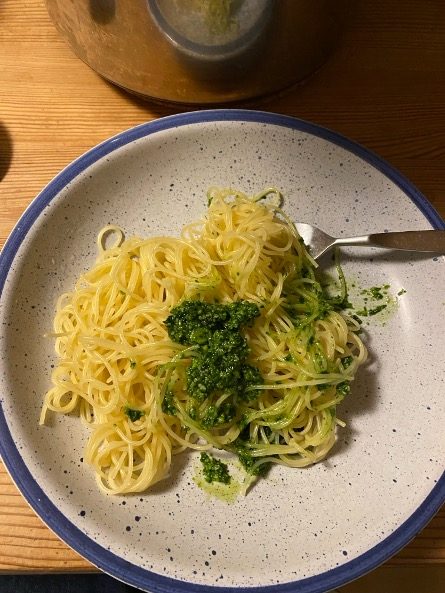
Pasta and Pesto!!!
After picking a few bags full of leaves and a lovely walk back to the apartment at sunset, it was finally time to make the wild-garlic pesto!! After washing and drying the leaves, we blended it all with loads of olive oil, cheese, and roasted pine nuts to make the pesto. Then it was ready to be stored away in jars to be used in the months to come. Of course, we didn’t forget to top off the day with a lovely, well-earned dinner of spaghetti with homemade fresh wild-garlic pesto, made with the leaves collected from our very own neighbourhood.
Needless to say, it tasted awesome, and our wild-garlic pesto batch lasted for about two months. Fun and insightful flat share activities with strong ties to nature, experienced with people who are purely passionate about what they learn are totally MyCuppaTea!!

 MyCuppaTea